Stop Water Before It Damages Your Property
Drainage Solutions and Water Management in Kingsley for controlling pooling water and protecting foundations from runoff-driven erosion
AA Land Services, LLC designs and installs drainage systems for property owners dealing with standing water, saturated yards, or runoff that threatens foundations and hardscaping. You need this service when water collects in low spots after every rain, when your basement stays damp despite sump pumps, or when erosion cuts channels across driveways and lawn areas. The work involves regrading slopes to redirect flow, cutting trenches for perforated pipe that captures subsurface water, and shaping swales or berms that intercept runoff before it reaches vulnerable areas.
Water follows gravity and soil permeability—if your property sits downhill from neighbors or clay layers trap moisture near the surface, you'll see symptoms like soggy turf, settling pavement, and foundation cracks that widen each spring. The crew surveys the site to map existing flow patterns, identifies where water enters and where it needs to exit, then engineers a system that moves it predictably through buried drains, open channels, or infiltration basins. Northeastern Pennsylvania's freeze-thaw cycles demand pipe bedding and trench backfill that won't heave or collapse when temperatures swing.
Contact AA Land Services, LLC to schedule a drainage assessment and discuss solutions tailored to your property's slope and soil behavior.
How Grading and Subsurface Systems Work Together
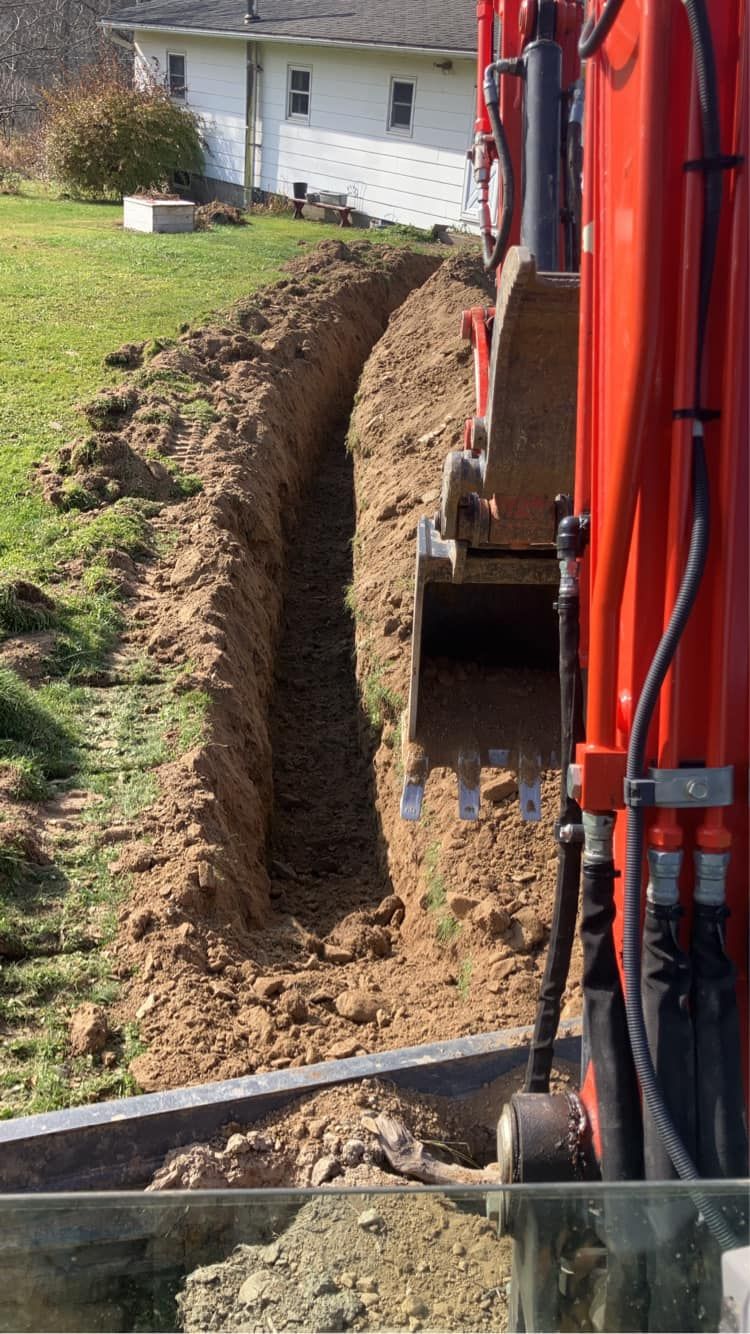
You'll see the excavator cut shallow trenches along problem zones, sloping them at least one percent so gravity pulls water toward outlets—daylight drains that empty onto vegetation, drywell pits that infiltrate into porous subsoil, or connections to storm sewers where permitted. Perforated pipe wrapped in filter fabric goes into the trench, surrounded by clean stone that drains fast and prevents sediment from clogging the perforations. The crew tests grade with a laser level before backfilling, ensuring the pipe never runs uphill or flattens into segments that trap water.
After installation, you'll notice water disappearing from areas that used to stay wet for days, driveways drying faster, and basements remaining dry during storms that previously soaked through walls. Surface grading pulls runoff away from foundations at a slope steep enough to prevent pooling but gentle enough to avoid erosion—typically two percent near structures. AA Land Services, LLC shapes perimeter swales to catch sheet flow from uphill neighbors, directing it around your buildings rather than letting it soak into foundation backfill.
The process includes trenching, pipe installation, stone bedding, and final grading to blend the drainage features into the landscape. It does not include foundation waterproofing, sump pump installation, or downspout connections—those fall under other trades. Long-term performance depends on maintaining outlet flows, so the crew clears debris from discharge points and marks cleanout access for future inspection if roots or sediment accumulate over time.
Practical Questions About Managing Property Water
Homeowners facing drainage problems often ask how systems route water, how long solutions last, and what signs indicate a need for adjustments after installation.
What happens if the outlet for a drainage system gets blocked?
Water backs up into the pipe and eventually floods the area the system was meant to protect, so outlets need periodic inspection to remove leaves, sediment, or ice dams that form in winter.
How deep do drainage trenches need to be for effective water capture?
Most residential systems run twelve to eighteen inches deep to intercept subsurface flow without hitting utility lines, though deeper trenches reach water tables or route under obstacles like sidewalks.
Why does regrading alone sometimes fail to solve drainage issues?
Surface grading moves sheet flow, but if water seeps up from below or saturates soil faster than it can run off, subsurface drains are necessary to lower the water table and dry out the root zone.
When should swales be used instead of buried pipe?
Swales work well on larger properties with space to shape gentle channels, while pipe systems fit tighter lots or areas where surface channels would interfere with mowing or foot traffic.
What soil conditions in Kingsley make drainage projects more challenging?
Heavy clay drains slowly and swells when wet, so systems in clay-rich areas often include more stone bedding and steeper grades to compensate for reduced infiltration rates.
AA Land Services, LLC can walk your property during or after a rainstorm to observe active flow patterns, then recommend grading adjustments, pipe routes, and outlet locations that solve the problem long-term. Call to arrange an on-site evaluation.