Prepare Your Land for Stable, Lasting Construction
Excavation and Grading for preventing drainage failures and unstable foundations before construction begins
AA Land Services, LLC provides excavation and grading for property owners preparing sites for new construction, driveways, or land development throughout Kingsley and the surrounding region. You need this service when you're breaking ground on a building, expanding access routes, or correcting a property that holds water where it shouldn't. The work involves removing soil to establish proper elevations, shaping the land to direct runoff away from structures, and compacting base layers so surfaces remain stable under load and weather.
Grading determines how water moves across your property once the excavator leaves. Without precise slope control, rain collects near foundations, driveways crack under freeze-thaw cycles, and low spots turn into mud basins every spring. The crew uses laser-guided equipment to set grades within fractions of an inch, ensuring runoff follows predictable paths toward swales, culverts, or natural drainage corridors. Soil composition influences compaction requirements—clay-heavy ground in this region behaves differently than sandy loam, and the equipment settings adjust accordingly to prevent settlement later.
Contact AA Land Services, LLC to schedule a site evaluation and receive a project estimate tailored to your property layout and soil conditions.
How Precision Equipment Shapes Long-Term Site Performance
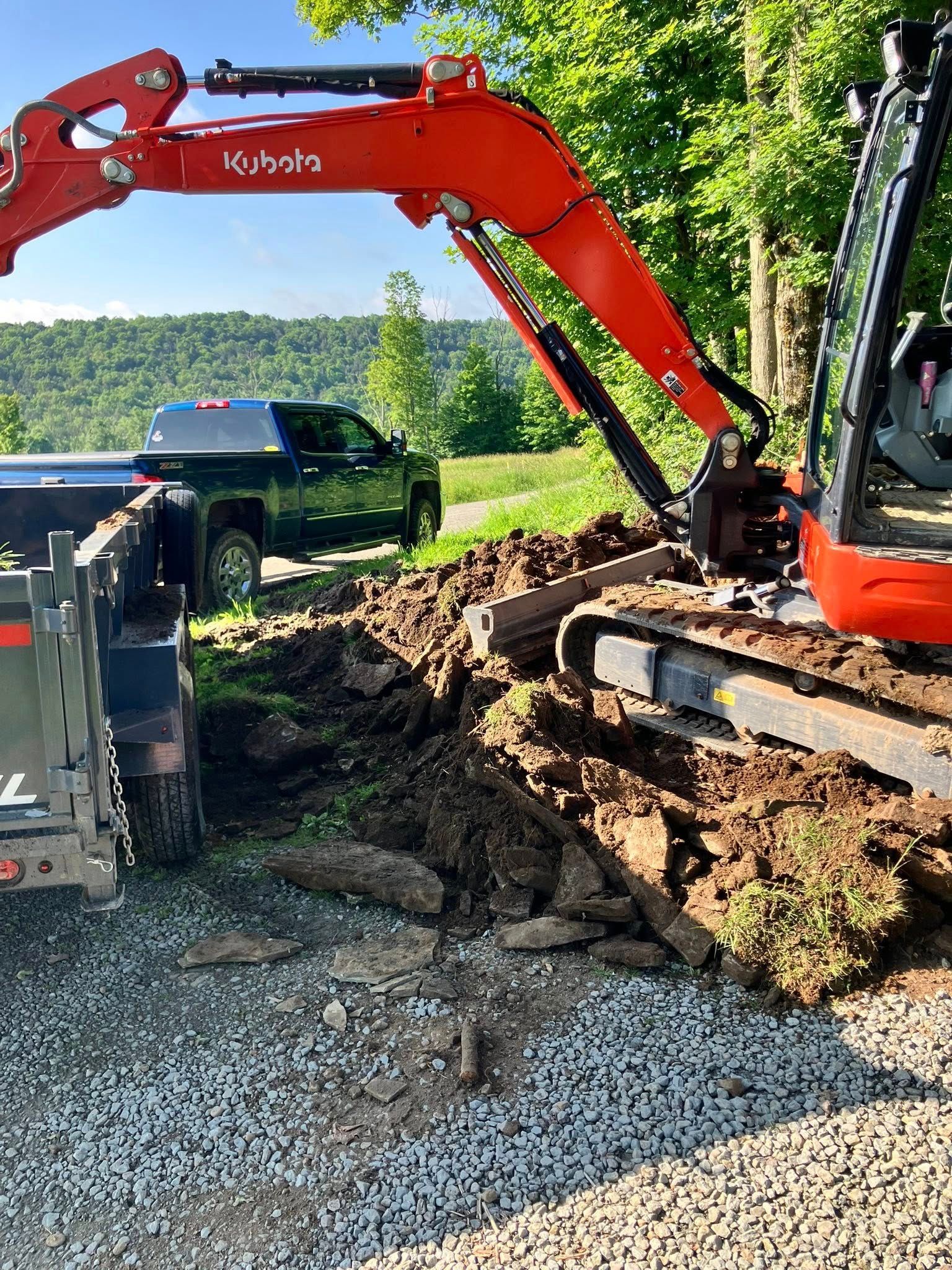
You'll see the excavator establish finished grade elevations using GPS receivers mounted on the bucket, which cross-reference a digital terrain model loaded before the first scoop. This technology removes guesswork and reduces the need for repeated passes, cutting fuel costs and limiting soil disturbance. The machine operator monitors grade in real time, adjusting blade angle and depth to match the engineered plan while accounting for variations in subsoil firmness.
After the grading is complete, water no longer pools against your foundation or collects in tire ruts along the driveway. Rainwater sheets across the surface and exits through designated outlets, leaving the site dry enough to walk within hours of a storm. AA Land Services, LLC compacts fill layers in eight-inch lifts, testing density with a plate compactor to confirm each layer can support the loads it will carry—whether that's a poured slab, asphalt pavement, or vehicle traffic.
The process includes stripping topsoil and stockpiling it for later redistribution, trenching utility corridors if required, and shaping perimeter swales to intercept runoff before it crosses property lines. The service does not include utility installation, septic design, or paving—those trades follow once the grade is certified. If bedrock appears during excavation, the crew assesses whether blasting or mechanical breaking is necessary, though most residential sites in the area reach target depth without encountering solid rock.
What You Should Know Before Starting Site Work
Clients preparing for construction or land development often ask practical questions about timing, soil behavior, and coordination with other contractors once rough grading wraps up.
How long does excavation and grading take for a typical residential building site?
Most single-family home sites require two to four days depending on cut-and-fill volumes, weather conditions, and access constraints, though larger parcels or complex drainage designs extend that timeline.
What happens if heavy rain arrives after grading but before paving or building?
Properly graded sites shed water without eroding, but the crew may return to touch up ruts or minor settling if vehicles cross the site before compaction fully cures, particularly in Kingsley's clay-rich soils that soften when saturated.
Why does the excavator remove topsoil before shaping the base grade?
Topsoil contains organic matter that compresses unevenly under load, so it's stripped and set aside, then replaced as a finish layer once structural fills are compacted to specification.
When should grading happen relative to utility installation?
Rough grading precedes most underground utilities so trenches cut into a stable, predictable subgrade, but finish grading follows utility backfill to restore design elevations and smooth any trench settlement.
What determines how much material needs to be hauled off-site versus redistributed?
The balance between cut and fill depends on existing topography and target elevations—sites with steep slopes or deep basements generate surplus soil, while others require imported fill to reach finish grade.
AA Land Services, LLC can walk your site to identify cut-and-fill quantities, evaluate drainage challenges, and outline a grading plan that supports your project goals. Reach out to discuss your timeline and receive a detailed estimate based on current site conditions.