Build Driveways That Handle Weather and Weight
Driveway Installation and Gravel Work in Kingsley for preventing washouts and maintaining year-round access on rural properties
AA Land Services, LLC installs and repairs gravel driveways for homeowners, farms, and rural properties where paved access isn't practical or necessary. You need this service when your current drive washes out after heavy rain, develops ruts that scrape vehicle undercarriages, or never had a proper base to begin with. The work starts with excavating soft or organic soil, installing a stone base that drains and resists compression, then capping it with graded gravel that sheds water and holds under tire loads through freeze-thaw cycles.
Proper base preparation makes the difference between a driveway that lasts a decade and one that fails within two seasons. The crew digs down to firm subgrade—typically twelve to eighteen inches depending on soil type—then fills the trench with angular stone that locks together when compacted. A vibratory roller presses the base in lifts, ensuring each layer reaches target density before the next goes down. The top course uses smaller, blended aggregate that compacts smooth but still allows water to percolate rather than ponding on the surface.
Contact AA Land Services, LLC to schedule a site visit and receive a detailed quote based on driveway length, soil conditions, and drainage requirements.
How Base Design and Grading Control Driveway Longevity
You'll see the excavator dig the alignment, sloping it subtly toward the edges so water doesn't run down the centerline and carve channels. Crown the driveway by raising the center slightly—usually two to three percent—so runoff sheets off both sides into swales or vegetation. If your property sits on clay or poorly drained soil common around Kingsley, the crew may install a geotextile fabric between subgrade and base stone to prevent mixing and maintain separation as frost heaves and settles the ground.
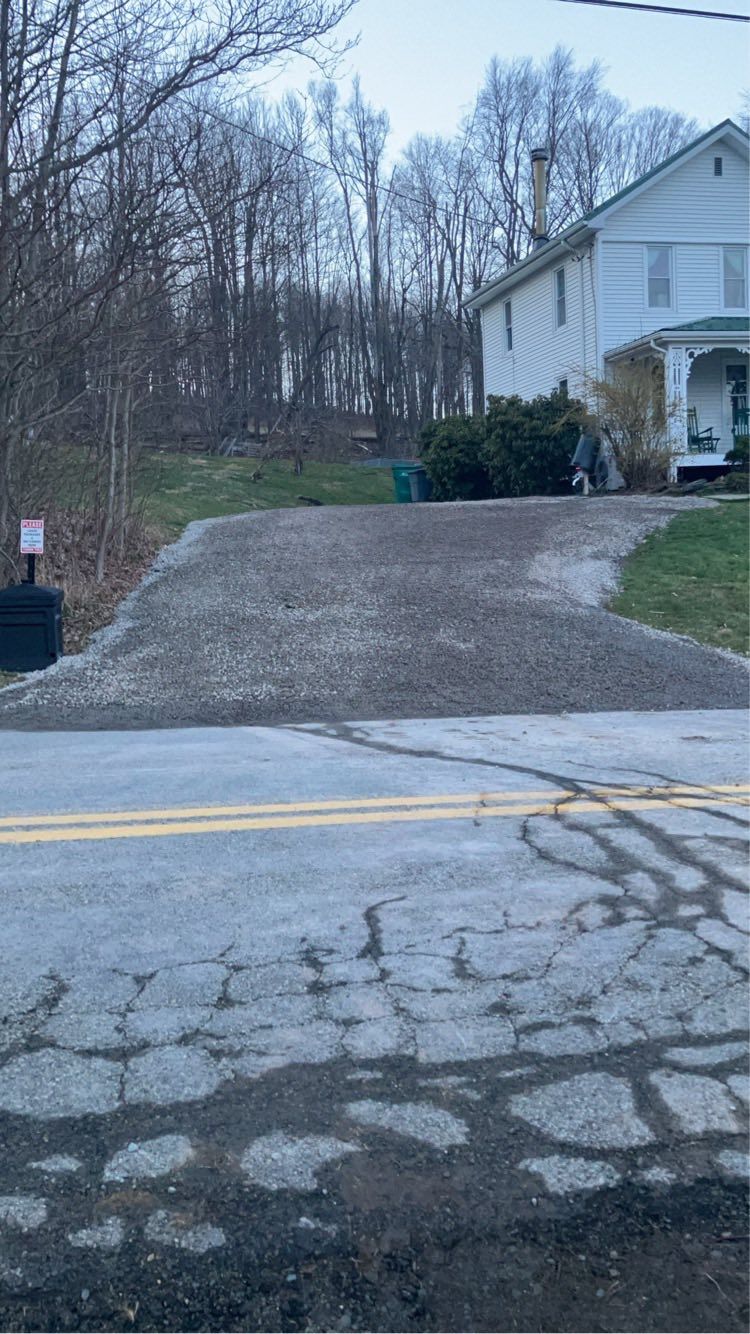
After installation, you'll drive on a firm, level surface that doesn't shift under braking or throw loose stones into windshields. Puddles disappear within minutes of rain stopping, and tire tracks fade as the gravel settles back into place. AA Land Services, LLC grades the top course with a box blade, feathering the edges to blend into surrounding terrain and avoid sharp drop-offs that collect runoff or trip mower decks.
The process includes setting grade stakes, compacting each base layer, and shaping perimeter drainage to direct water away from the drive. It does not include culvert installation, paving, or tree removal—those are separate line items if your project requires them. Existing driveways can be expanded, resurfaced, or corrected for drainage problems by adding stone, regrading the crown, or cutting relief swales along the uphill side to intercept sheet flow before it crosses the drive.
What Property Owners Ask About Gravel Driveways
Clients planning new driveways or fixing failed ones often want to know how much stone to budget for, how long the work takes, and what maintenance looks like over time.
How deep should the base be for a residential driveway?
Most stable installations use six to eight inches of crushed base stone topped with two to four inches of finish gravel, though soft subgrade or heavy vehicle traffic increases those depths.
What causes a gravel driveway to develop ruts and washouts?
Insufficient base thickness, poor drainage design, or using round river stone instead of angular crusher run all lead to shifting and erosion, especially when water flows along the drive instead of across it.
Why does the crew compact stone in layers instead of dumping it all at once?
Compacting in lifts ensures uniform density throughout the base—dumping twelve inches loose and rolling the top only hardens the surface while leaving voids below that collapse under load.
When should a driveway be regraded or have stone added?
Plan to add a half-inch to an inch of top-course gravel every few years as traffic wears the surface, and regrade if the crown flattens or low spots develop where water ponds.
What's the difference between crushed stone and gravel for the top layer?
Crushed stone has angular edges that lock together, while rounded gravel shifts more easily—blended aggregates combine both for a surface that compacts firm but still drains.
AA Land Services, LLC can evaluate your site, test subgrade firmness, and recommend stone types and depths that match your soil and usage patterns. Reach out to discuss your access needs and get a project estimate.