Reclaim Overgrown Land Without Hauling Debris
Forestry Mulching and Brush Clearing in Kingsley for reclaiming overgrown acreage and restoring land usability without repeated trailer loads
AA Land Services, LLC offers forestry mulching and brush clearing for property owners facing dense overgrowth, tangled saplings, and thickets that limit access or obscure usable ground. You need this service when trails disappear under multiflora rose and grapevine, when property lines vanish into second-growth forest, or when you're preparing acreage for pasture, development, or fire-safe perimeters. The mulcher grinds standing brush, small trees up to six inches in diameter, and woody debris into a uniform layer of shredded material that settles across the cleared zone, decomposing in place rather than filling dumpsters or burn piles.
The machine's rotating drum carries hardened teeth that chew through stems at ground level, reducing everything to chips and fiber in a single pass. Unlike a bulldozer that tears out roots and displaces topsoil, the mulcher leaves the ground surface intact, preserving soil structure and minimizing erosion risk on slopes. The mulch layer—typically two to four inches deep—suppresses weed germination, retains moisture, and feeds beneficial microbes as it breaks down, improving soil quality over the months following clearing.
Contact AA Land Services, LLC to arrange a site consultation and discuss the scope of your land clearing project.
Why Mulching Outperforms Conventional Clearing Methods
You'll notice the mulcher working in strips, advancing across the property while the operator adjusts drum speed and ground pressure to match vegetation density. In thick stands of saplings, the machine slows to ensure complete shredding; in sparse undergrowth, it accelerates to cover ground faster. The process generates noise and throws chips against the drum housing, but there's no smoke, no stump grinding, and no need to coordinate hauling schedules or negotiate dump fees.
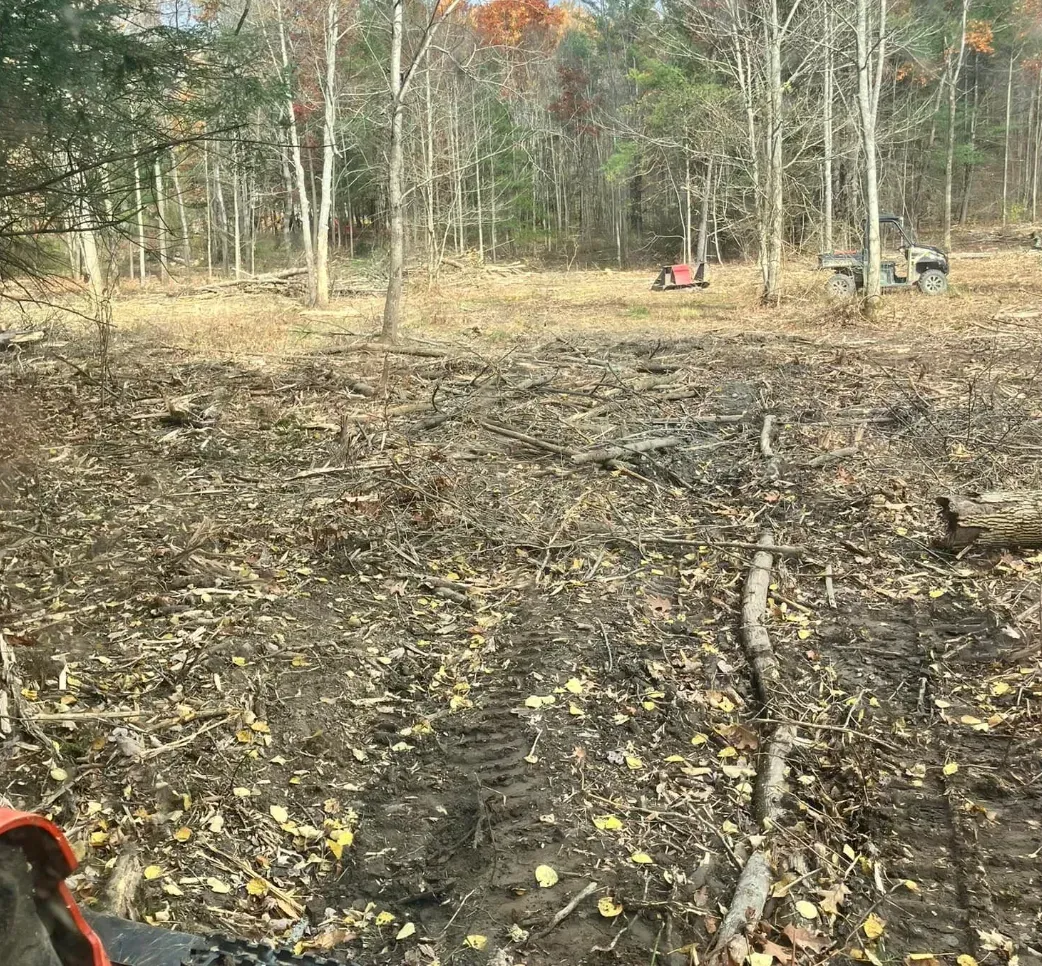
After clearing, you'll see defined edges along trails or borders, open sightlines across previously hidden terrain, and a stable walking surface where roots and stumps once tripped equipment. The mulch mat dries firm within days, supporting foot traffic and light vehicles without the ruts or compaction common on bare soil. AA Land Services, LLC operates tracked machines capable of reaching steep or wet ground that wheeled equipment would tear up, making the service practical for streambanks, hillsides, and back acreage with limited access.
The scope includes clearing brush, saplings, and low limbs from larger trees, but does not cover mature tree felling, stump removal below grade, or grading work—those require separate equipment. If you're managing large acreage or targeting invasive species like autumn olive or buckthorn, the mulcher can return periodically to knock back regrowth before it reestablishes, maintaining the cleared state without herbicides or repeated hand cutting.
Common Questions About Mulching and Land Restoration
Landowners considering forestry mulching often want to understand what the finished surface looks like, how long clearing takes, and what happens to the mulch over time.
What size trees can the mulcher handle without switching to a chainsaw?
The drum teeth cut stems up to six inches in diameter efficiently, but larger trunks require felling and separate processing, so the operator marks those before starting the mulching pass.
How does mulching affect regrowth compared to mowing or bush-hogging?
The mulch layer smothers low vegetation and shades the soil, slowing germination and making any regrowth easier to spot and address, whereas mowing leaves root systems undisturbed and often stimulates faster sprouting.
Why does the operator leave some standing trees while clearing around them?
Selective clearing preserves shade, wildlife habitat, or desirable species like oak and walnut, while removing competing brush that steals light and water from those mature specimens.
When is the best season for forestry mulching in Kingsley?
Late fall through early spring works well because frozen or dry ground supports the machine's weight without rutting, and dormant plants are easier to identify and target before leaf-out obscures the understory.
What happens if the property includes old fence lines or hidden debris?
The operator surveys the site before starting to locate metal posts, wire, or junk that could damage the drum, and flags those hazards for removal or avoidance during the clearing run.
AA Land Services, LLC can assess your acreage, identify vegetation types, and provide a clearing plan that balances cost, access, and long-term land management goals. Call to discuss your property and schedule a walkthrough.